
Giving back or volunteering on your holiday- what's the difference
- sheila7386
- Apr 11
- 4 min read
This is a topic that arises quite often for me at EVA Travel, particularly for people who feel that they aren't doing enough volunteering on our tours. I think it's very important for us to understand that there are differences between these 2 types of travel and why one may be more suitable than the other for people to consider. For decades, the concept of "volunteering abroad" was synonymous with the traditional gap year. It often conjured images of students spending months in remote villages, living in basic conditions, and dedicating their entire journey to a single project.
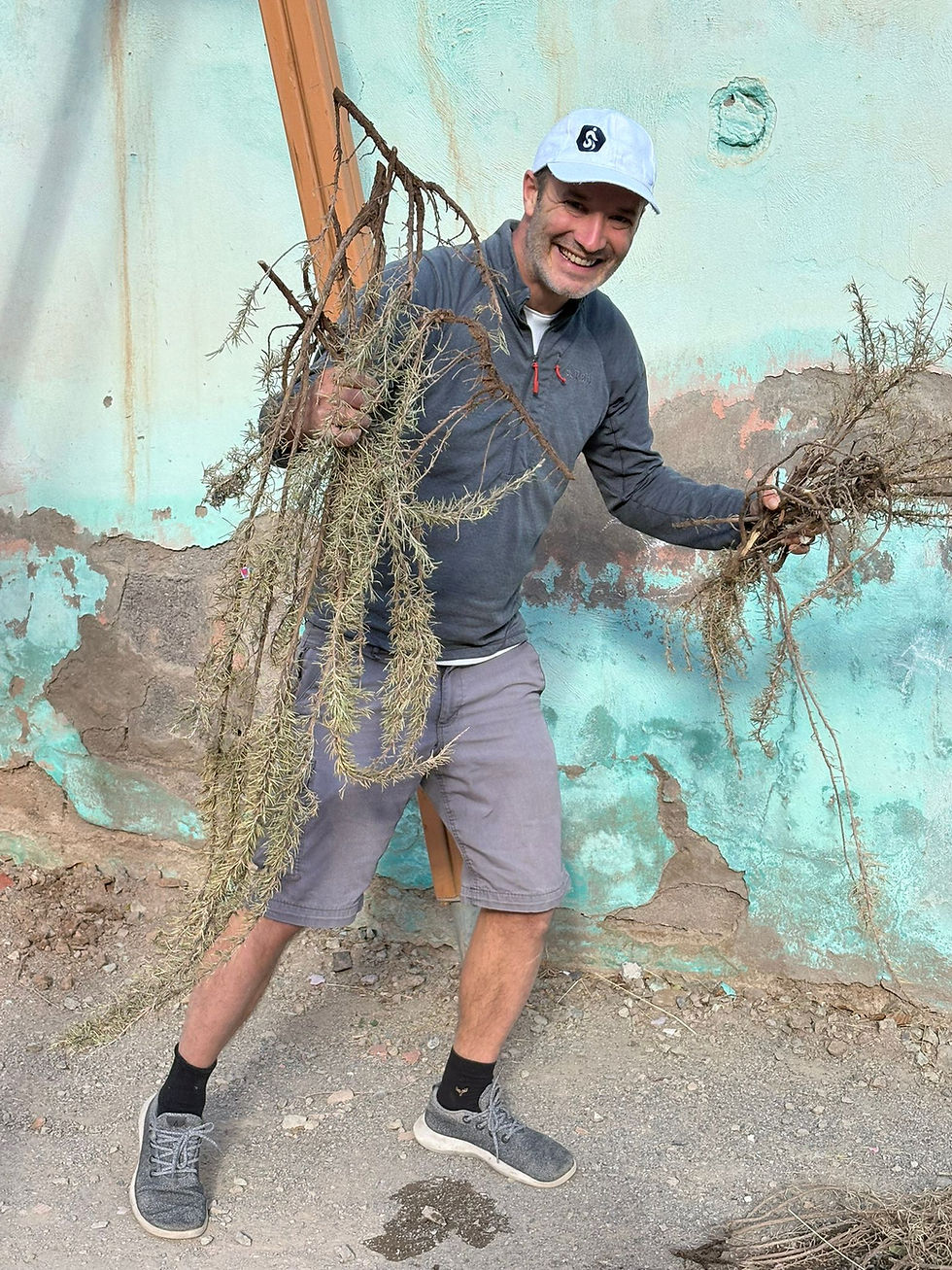
While this model still offers immense value, a new evolution in purposeful travel has emerged: the Give-Back Holiday.
As championed by EVA Travel, the distinction between a traditional volunteer holiday and a give-back holiday is more than just a matter of days; it is a fundamental shift in how we balance personal adventure with global contribution. For the "young at heart" traveler—particularly those in the 40+ demographic—understanding this difference is the key to choosing an experience that fits both their lifestyle and their desire to make a difference.
The Traditional Volunteer Holiday: The Deep Dive
Traditional volunteer holidays are typically immersive, long-term commitments. They are designed for individuals who want to "embed" themselves within a community for weeks or even months.
Duration: Usually 2 weeks to 3 months or longer.
Focus: The primary goal is the work. Whether it is teaching English, assisting in medical clinics, or long-term wildlife monitoring, the "holiday" aspect is secondary to the "volunteer" aspect.
Lifestyle: Accommodations are often modest—homestays or dormitories—to keep costs low and immersion high. It requires a significant pause in one’s regular life, making it a popular choice for retirees, gap year students or people on a career break.
While deeply rewarding, the traditional model can be unsuitable for active professionals or travellers who still want to see the bucket-list sights of a country without spending their entire annual leave on a single construction site or sanctuary.
The Give-Back Holiday: Purpose Meets Pleasure
The "Give-Back Holiday," a term central to the EVA Travel philosophy, reimagines purposeful travel for the modern explorer. It recognizes that you don't need to sacrifice your comfort or your entire itinerary to leave a positive legacy.
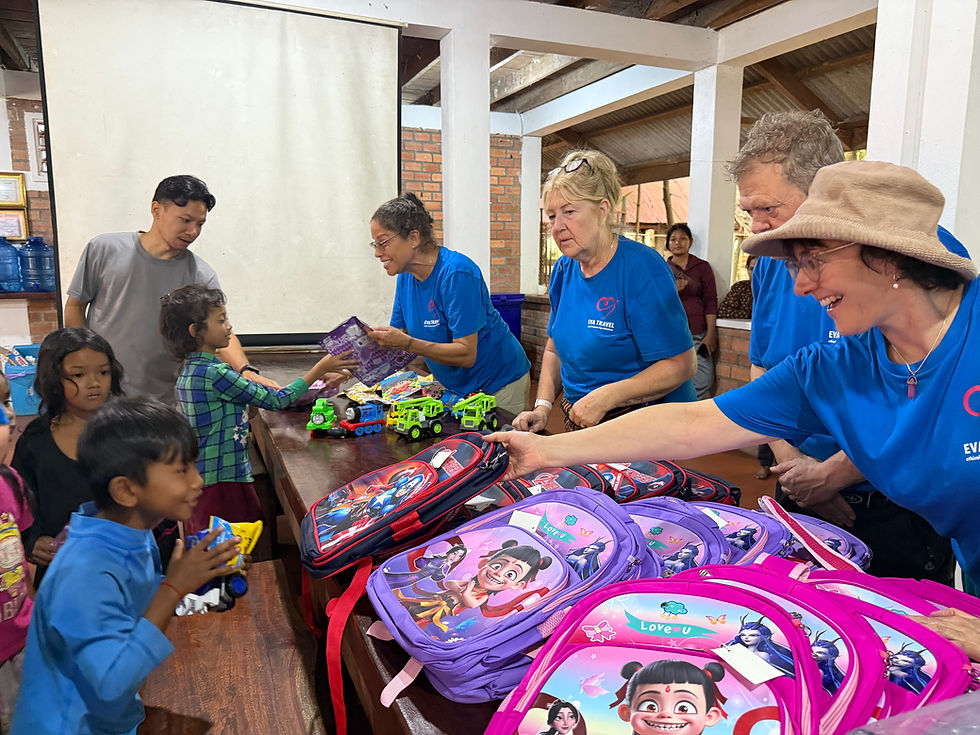
Duration: A standard 10–14 day tour, with 3 to 5 days dedicated to community engagement.
The "Hybrid" Itinerary: A give-back holiday is a meticulously balanced blend. You might spend three days painting a school in the Ugandan heartlands, tracking tigers in Nepal or building wheelchairs for landmine survivors in Cambodia, but the rest of the trip is spent exploring the nooks and crannies of the region—think sunset boat cruises in Cambodia or Big 5 safaris in the Serengeti.
Impact Without Burnout: By dedicating a specific window to service, travellers can give 100% of their energy to a project without the physical or emotional fatigue that can sometimes accompany months of high-intensity volunteering.
Why the "Give-Back" Model Works for the 50+ Traveler
EVA Travel’s founder, Sheila Fitzgerald, built the brand on the belief that travel should be "fun, immersive, and deeply satisfying." For the over-50 community, the give-back model offers several distinct advantages:
1. Professional Skill Sharing
In a 3-to-5-day window, older travelers often bring a lifetime of professional experience. Whether it's mentoring a local women’s cooperative in Rwanda or helping with infrastructure after an earthquake, the focus is on "quality of contribution" over "quantity of time."
2. Sustainability and Ethics
One of the pitfalls of short-term volunteering is the risk of "voluntourism," where projects are created just to keep tourists busy. EVA Travel avoids this by partnering with local community leaders or NGOs to ensure every project is community-led. The 3–5 days of work are not arbitrary; they are specific tasks identified by the locals as areas where a small group can make a tangible difference quickly. We don't build or work for the sake of it, every project is meaningful and sustainable.
3. Comfort and Community
Give-back holidays are all about authenticity. While we can enjoy comfortable accommodation on the sightseeing part of the tour, we like to use homestay or volunteer houses for the giveback portion. We live with and among the community we are engaging with and living like this gives a real feel for the country we visit. Safety is paramount, so our groups tend to be small (6-10 people) and all the projects and accommodation has been vetted and assessed for risk prior to departure. Having said that, standards can be much lower in underdeveloped nations, but its only for a few days and its a story you'll tell for years. So you may have to share a room, have a lukewarm shower or use a rough towel, but you're experiencing life to the full.


Making the Choice
When deciding between the two, ask yourself: Is my goal to change my life, or to enhance it?
If you are at a crossroads and wish to disappear into a new culture for a season, a traditional volunteer holiday is an unmatched soul-searching tool. However, if you are looking for "travel with purpose"—a way to see the world’s most beautiful places while ensuring that your presence benefits theople who live there—the give-back holiday is the future of responsible tourism.
At its heart, a give-back holiday proves that you don't have to choose between a "real" holiday and "real" impact. As seen in the jungles of Borneo or the villages of Tanzania, sometimes the most meaningful footprints are the ones we leave behind in just a few well-spent days.


Comments